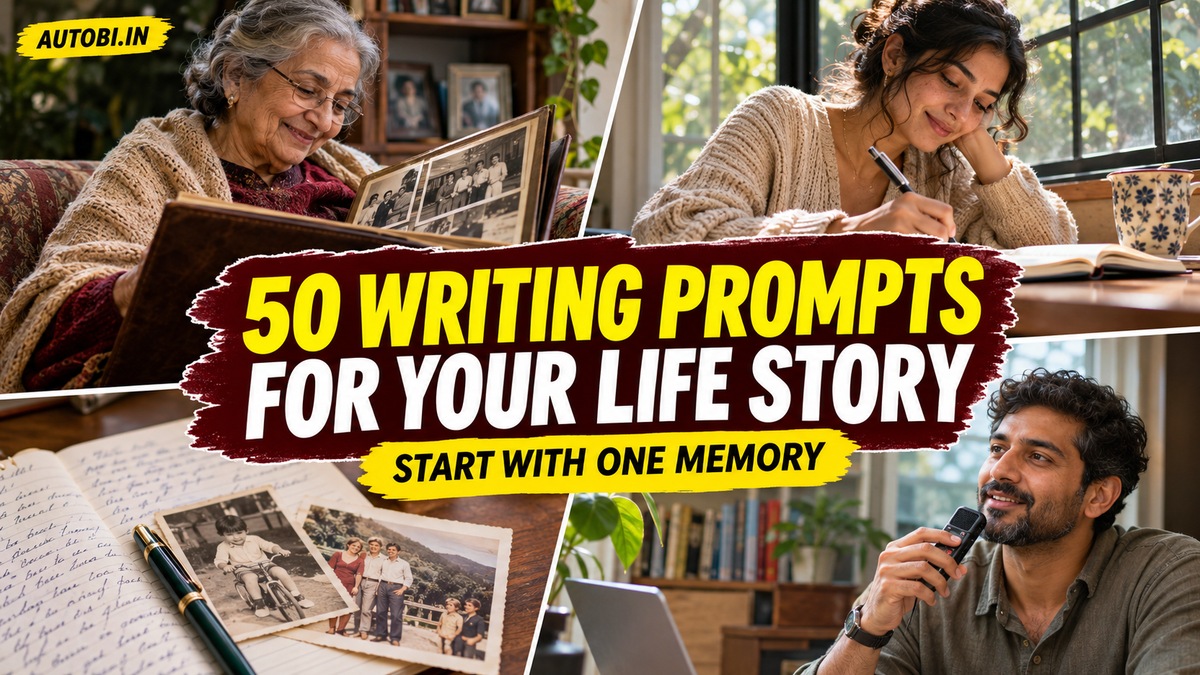
Autobiography writing prompts help you begin with a specific memory instead of trying to summarize your entire life. Choose one question, write what you remember and explain why it matters to you now.
You do not have to answer every question or write in order. Skip anything you do not want to explore. These prompts are writing exercises, and you can keep your responses private.
How to turn a prompt into a story
Set aside ten to fifteen minutes. Name the place, the people and your approximate age. Describe one action or moment before adding reflection. If a detail is uncertain, mark it for checking. Do not invent dialogue or dates simply to fill a gap.
For example, “Who taught you a practical skill?” could lead to a scene about learning to cook. Describe the task, a mistake and the person’s response. Then explain what you still carry from that lesson. That gives you a scene with meaning rather than a general tribute.
Childhood and the places you remember
- What is the earliest place you can describe clearly?
- Which room in your childhood home felt most like yours?
- What sounds told you a normal day had begun?
- Which route did you travel so often you could picture every turn?
- What did you do when you had an afternoon with no plans?
- Which food brings back a particular childhood scene?
- What object did you treasure, and what happened to it?
- When did a familiar place begin to feel different?
- Which childhood rule did you find hardest to understand?
- What would surprise your younger self about your life today?
Family, relationships and belonging
- Who made you feel welcome when you were new somewhere?
- Which family tradition had a meaning you understood only later?
- Who taught you a practical skill you still use?
- What ordinary activity helped you connect with someone?
- Which family phrase or expression do you remember?
- How did your household celebrate small successes?
- When did you first see an older relative as a person with a story of their own?
- Which friendship changed how you saw yourself?
- What did moving closer to or farther from someone teach you?
- What would you like future family members to understand about your everyday life?
School, curiosity and learning
- Which lesson made you curious enough to investigate further?
- What did you learn outside a classroom that mattered inside it?
- Who noticed an ability before you noticed it yourself?
- When did you ask for help, and what happened?
- What project did you keep working on even when nobody required it?
- Which mistake changed the way you prepared for something?
- What did you once believe you could never learn?
- Which book, song or artwork changed a question you were asking?
- When did you change your mind after listening to someone?
- What are you learning now that you wish you had tried earlier?
Work, responsibility and independence
- What was the first task someone trusted you to handle alone?
- What do you remember about your first day at a job or new responsibility?
- Which small routine made a difficult period more manageable?
- When did you decide that a particular path did not suit you?
- What did a colleague or teammate teach you by example?
- Which decision required you to balance two important priorities?
- What did you learn from work that was rarely noticed?
- When did you feel proud of being dependable?
- How has your definition of success changed?
- What would you tell someone beginning a similar journey?
Turning points, values and life today
- Which journey changed your sense of home?
- When did you choose something unfamiliar?
- What did you stop doing because your priorities changed?
- Which ordinary day became meaningful only in hindsight?
- When did you notice that you had become more patient?
- What value did you learn through an action rather than advice?
- Which achievement matters to you even if few people know about it?
- What do you want to preserve from your present routine?
- What question about your life are you still trying to answer?
- What would you like a reader to carry away from your story?
Arrange your answers into chapters
After writing five responses, look for connections. Three memories about different houses may form a chapter about belonging. Several accounts of learning a skill may become a chapter about persistence. Use the autobiography outline to organize those connections.
If one group of memories explores a single period or change, it may suit a memoir. Read our memoir vs autobiography comparison to choose the scope that fits.
What if I cannot remember enough?
Look at your own photographs, calendars or objects and note what they bring back. If you speak to relatives, distinguish their recollections from your own and ask before quoting private conversations. Different people may remember the same event differently; you can acknowledge that instead of forcing certainty.
What should I do next?
Choose one response and revise it into a complete scene. Add background only where a reader needs it. Finish with a few sentences about why the memory matters. Our beginner’s guide explains the next steps, and the Autobiography Maker can help you collect your drafts. Keep a separate backup before changing devices or clearing browser data.